Report: Basic Income can kickstart Canadian Prairies' economic recovery, while ending poverty.
A landmark study by the Canadian Centre for Economic Analysis (CANCEA) gives us a first ever look at the economic impacts of a national Basic Income and its positive effects on the economies of Alberta, Saskatchewan, and Manitoba.
Basic Income can grow the Prairie economy and create jobs.
+59K NEW JOBS
Basic income could add 59,000 new full-time equivalent jobs in the prairie provinces in 5 years.
+$8B/YR IN GDP
Basic Income could grow the prairie economy $47 billion within 5 years — or up to $114 billion in 25 years.
Basic Income can grow the Prairie economy and create jobs.
+$3.6B/YR GROSS OPERATING SURPLUS
Putting money in people’s hands lets them spend it in their local economies, driving business growth. It could add $21 billion to prairie businesses’ gross operating surplus within 5 years — or up to $52 billion in 25 years.
+$1.7B/YR PRIVATE CAPITAL INVESTMENTS
Basic Income could add $10 billion in new private capital investments within 5 years — or up to $22 billion in 25 years. It could cause businesses to hire and spend more on wages for workers.
Basic Income is a raise for Prairie workers.
+1.3% IN TOTAL WAGES
Basic Income could support workers in the prairie provinces by growing total wages $2.5 billion a year on average over 5 years, or an increase of 1.3% by year 5.
All while ending poverty in the Canadian Prairies
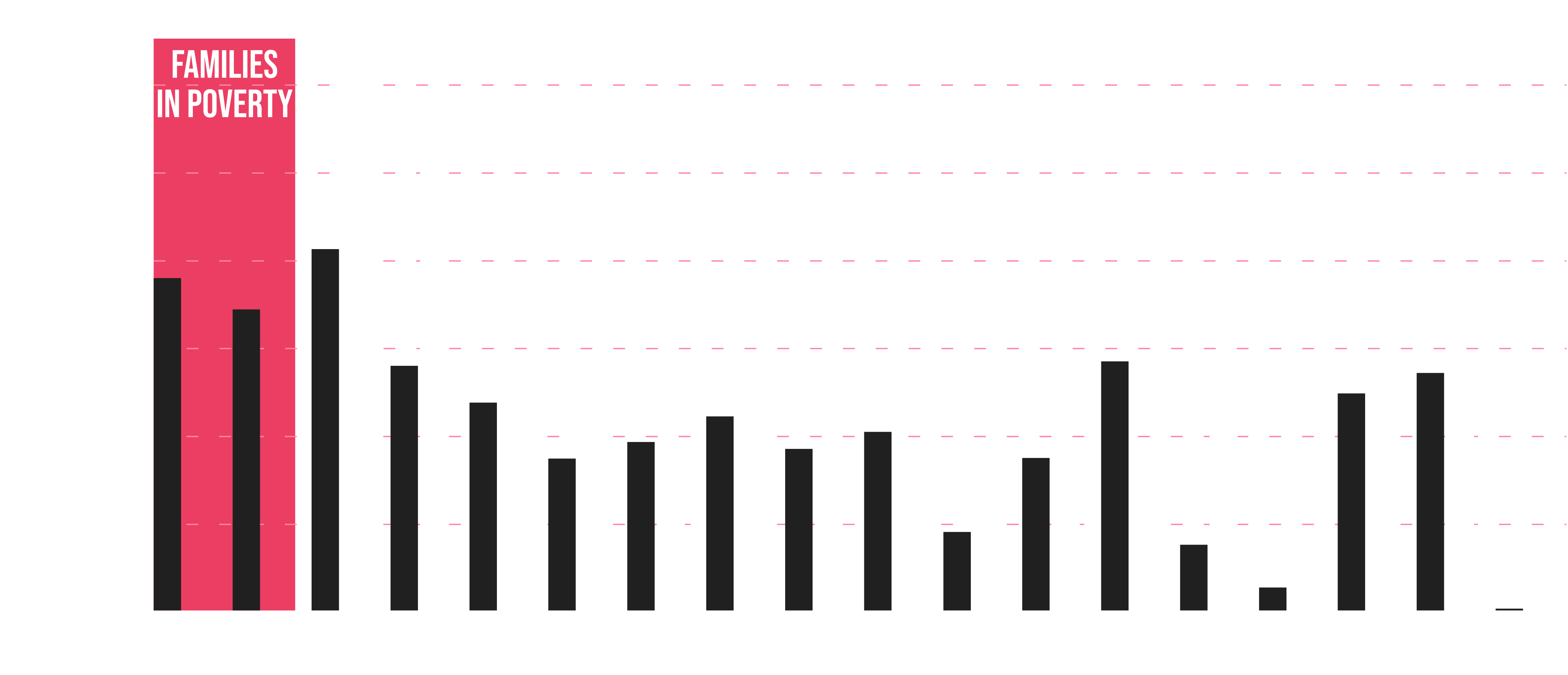
530,000 Prairie FAMILIES LIFTED OUT OF POVERTY
The report demonstrates that inequality is making our economy less resilient. Basic Income can eliminate poverty in Alberta, Saskatchewan, and Manitoba while building a healthy, trickle-up economy that supports Canadian workers and businesses.
Families in Prairie provinces - without UBI and with UBI